
Vineyards & soils
200 million years in a glass
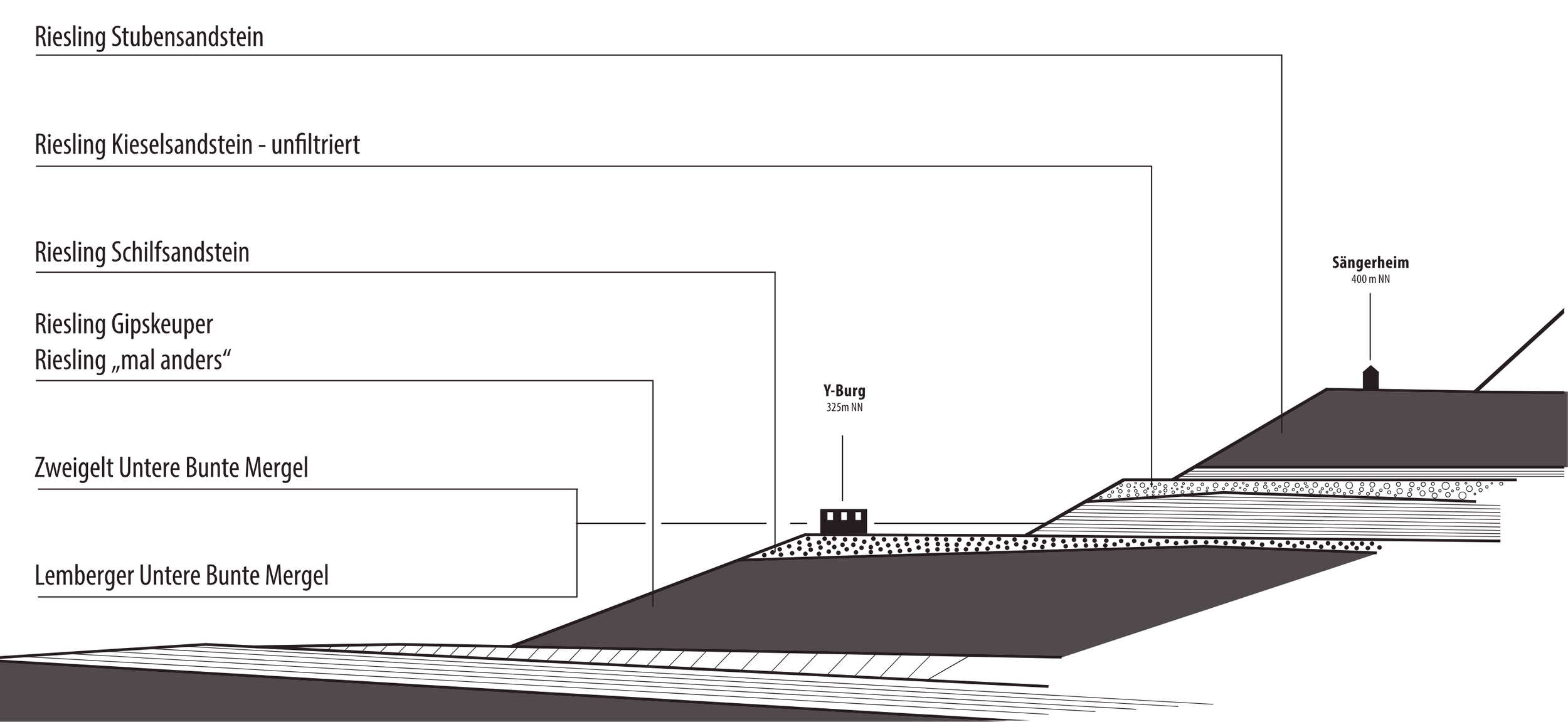
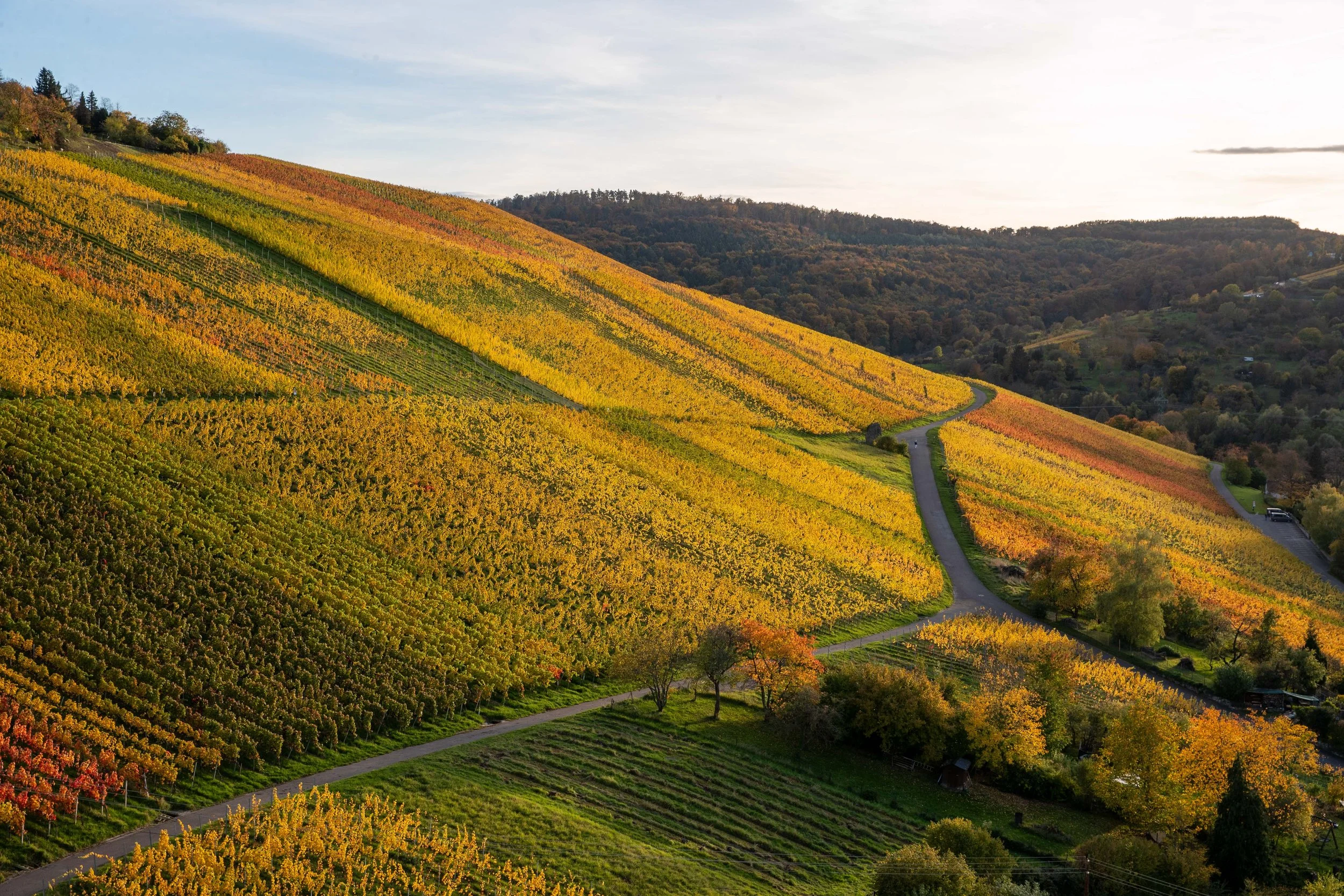
Our vineyards lie between 280 and 400 metres above sea level on the Keuper escarpment around Stetten. You can taste every rock in the glass.
Keuper
Four rocks, layer upon layer
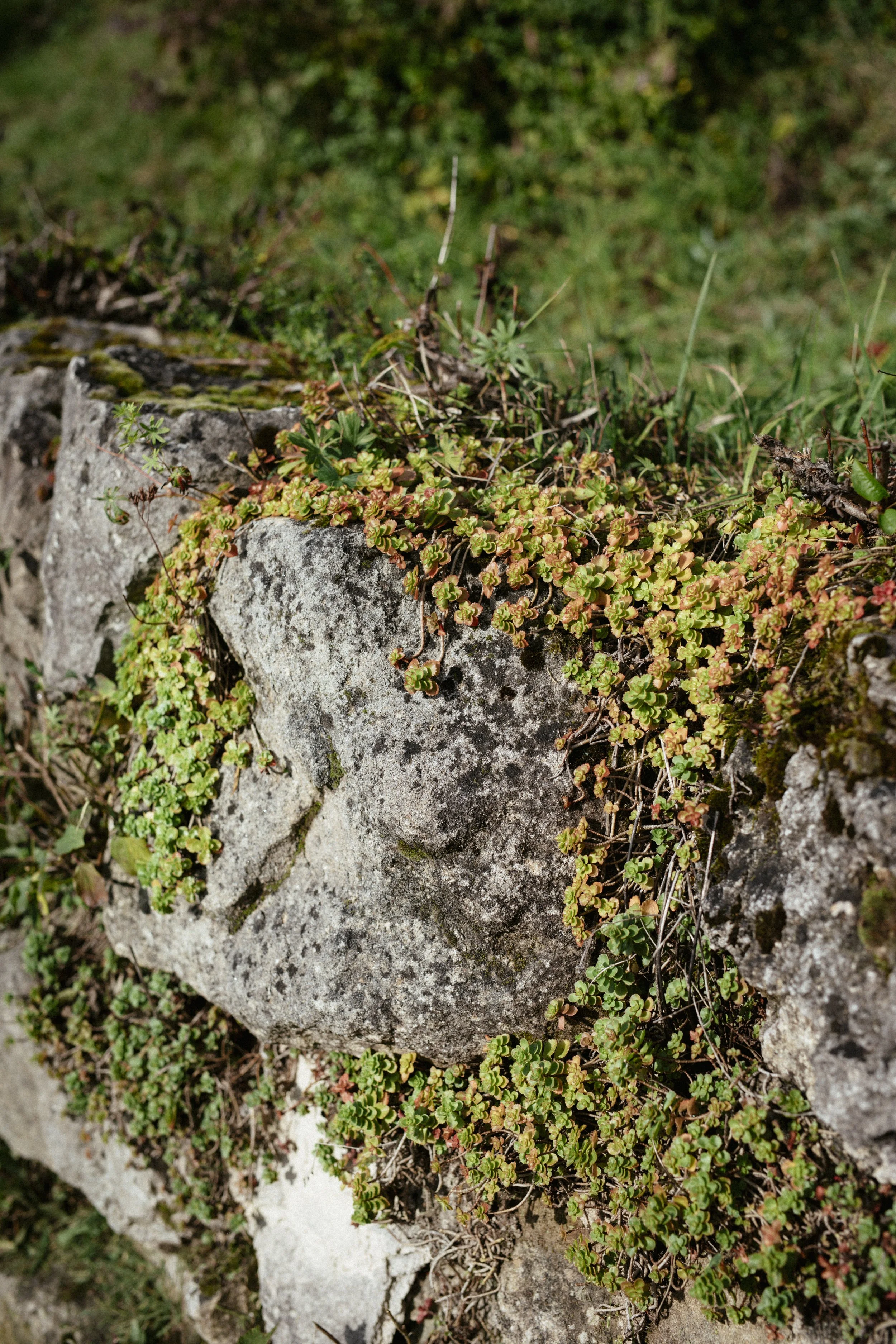
The soils around Stetten were formed in the Keuper period. Gipskeuper (gypsum marl), Schilfsandstein (reed sandstone), Kieselsandstein (siliceous sandstone) and Stubensandstein were deposited one after another and today form a terraced landscape.
Soil-specific
The rock is on the label
Each rock gives the wine something different. That is why we vinify our Rieslings separately by soil.
Kieselsandstein
Riesling Kieselsandstein, unfiltered
Schilfsandstein
Riesling Schilfsandstein
Gipskeuper
Riesling Gipskeuper · Riesling „mal anders“
Untere Bunte Mergel
Zweigelt · Lemberger
Grand Cru sites
Our Grand Cru sites
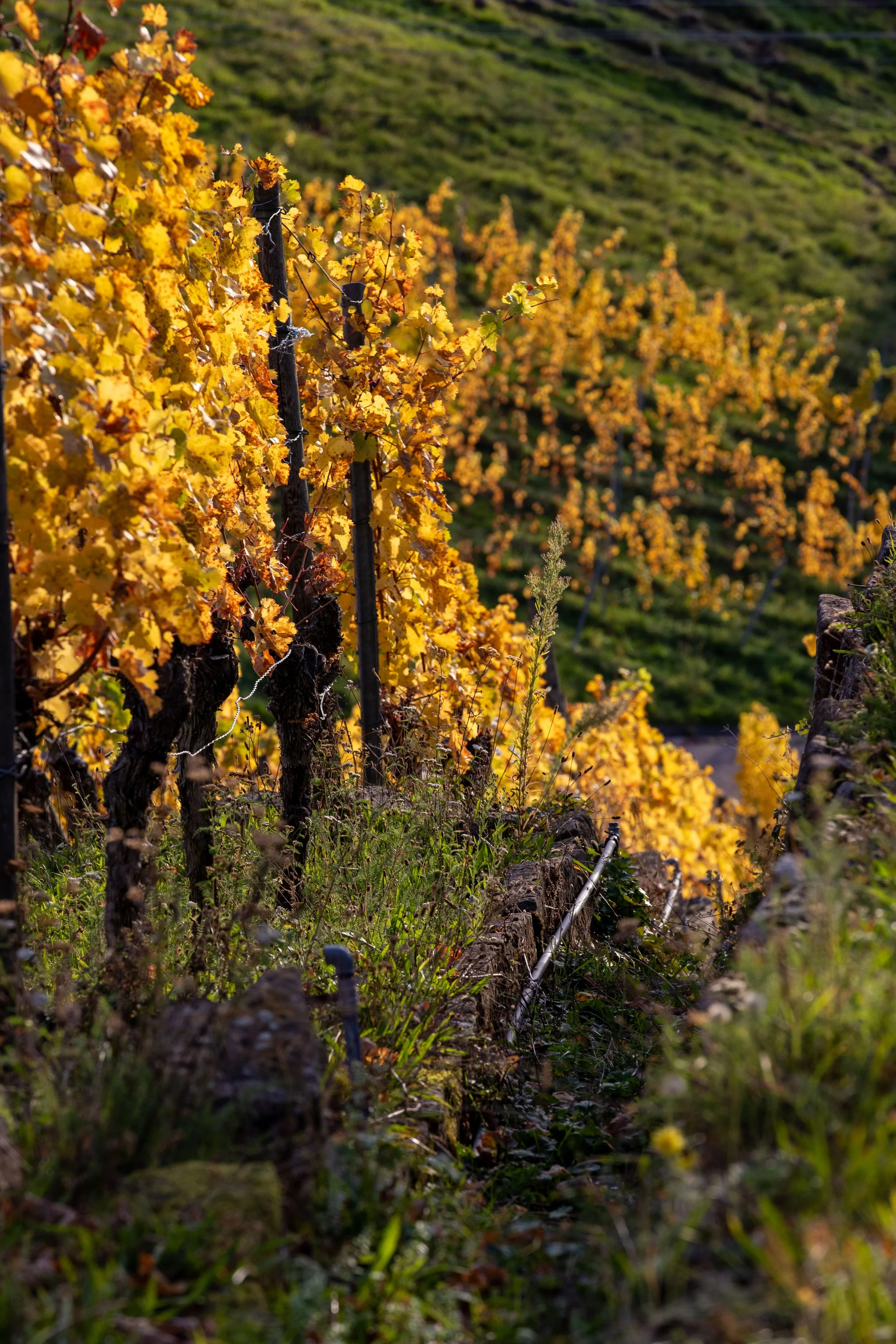
For our Grand Cru wines (Große Gewächse) we use the historic parcel names. The vines were planted between 1968 and 1995.
Berge
Stettener Pulvermächer · Riesling GG
Öde Halde
Stettener Mönchberg · Spätburgunder GG
Schalksberg
Stettener Mönchberg · Lemberger GG
Heritage vineyard
Rettet die Reben (Save the Vines)
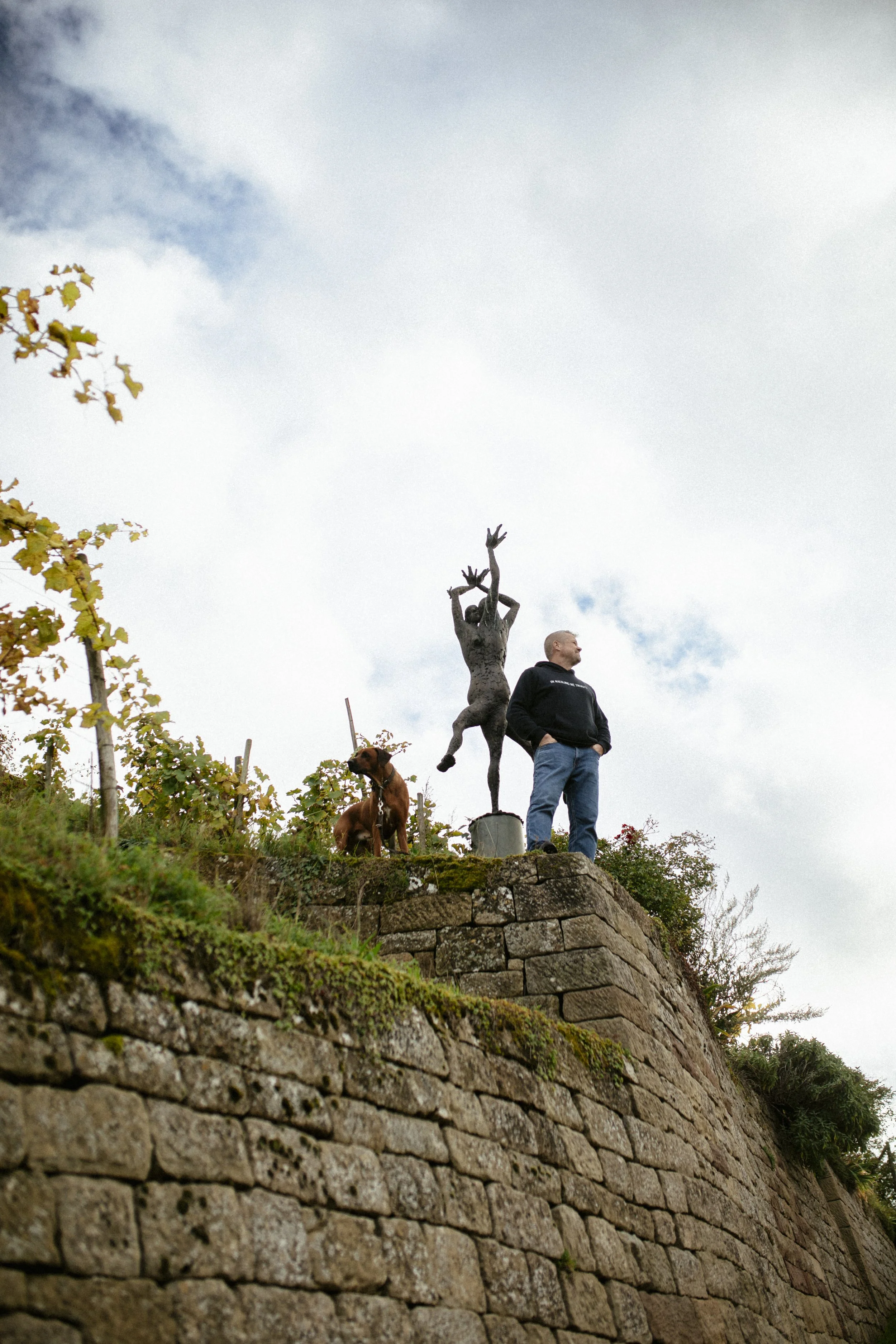
Right below the Y-Burg castle, we replanted an abandoned vineyard with more than 25 medieval grape varieties that had long since disappeared from Württemberg. They grow among herbs, peach trees and dry-stone walls and are tended entirely by hand.
Since 2019, it has also been home to a cutting from the world’s oldest vine in Maribor. This is where our field blend “Rettet die Reben” comes from.
Taste the soil
Our wine list shows which soil produces which wine.